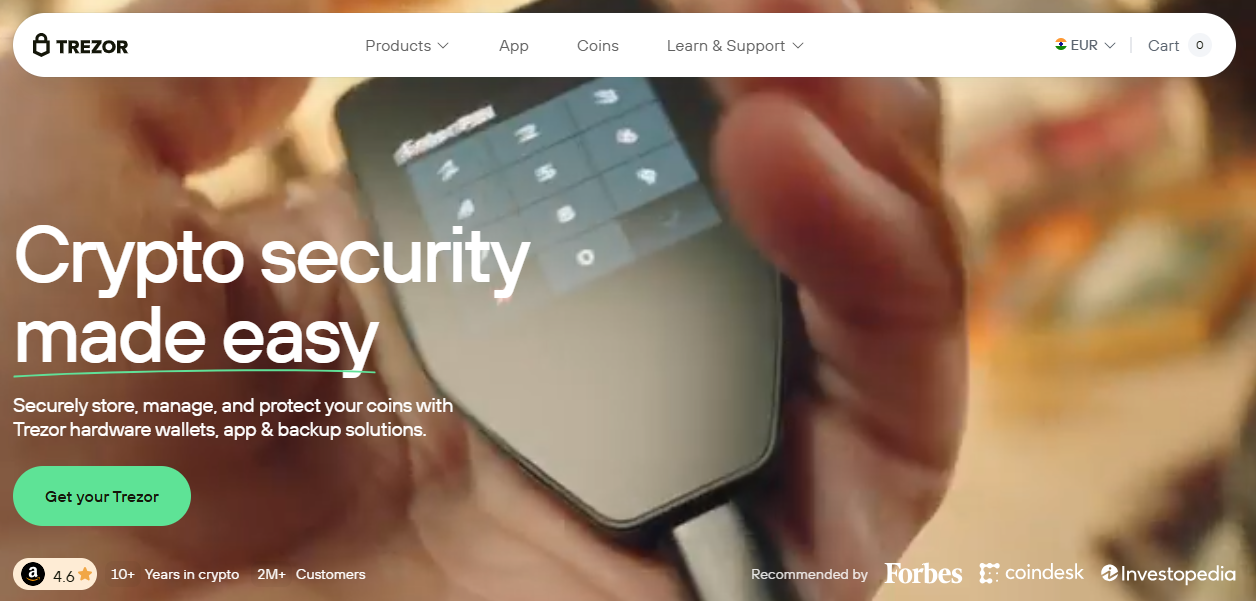
Setting up a Trezor Hardware Wallet is a simple process. After connecting the device to a computer or mobile device, users are guided through the initialization steps. This includes creating a PIN, generating a recovery seed, and confirming the backup.
It is essential to store the recovery seed securely offline, preferably written on paper and kept in a safe location. Anyone with access to the recovery seed can restore the wallet and access the funds.
Once the setup is complete, users can start managing their cryptocurrencies, sending and receiving funds securely through the Trezor interface.
Trezor has established itself as a trusted name in the cryptocurrency industry. Its focus on transparency, user security, and continuous innovation makes it a preferred choice for individuals seeking reliable crypto protection.
Unlike online wallets that rely on centralized servers, Trezor empowers users with complete control. This aligns with the decentralized philosophy of cryptocurrencies, where ownership and responsibility rest with the individual.
Whether you are a long-term investor or an active trader, a Trezor Hardware Wallet provides a robust and dependable solution for safeguarding digital assets.
Users should never share their recovery seed or store it digitally. Keeping the seed offline is crucial for security. It is also important to verify transaction details on the device screen before confirming any transaction.
Another mistake is neglecting firmware updates. Regular updates ensure the wallet remains protected against newly discovered vulnerabilities.
Trezor stores private keys offline, protecting them from online threats such as hacking, malware, and phishing attacks that commonly affect software wallets.
Yes, funds can be recovered using the recovery seed generated during setup. This seed allows wallet restoration on a new device.
Yes, Trezor Hardware Wallet supports a wide range of cryptocurrencies, including major coins and popular tokens.
Yes, Trezor offers an easy setup process and a user-friendly interface, making it suitable for both beginners and experienced users.
Without the PIN and optional passphrase, the thief cannot access the funds. Users can restore assets on a new device using the recovery seed.
An internet connection is required to broadcast transactions, but private keys always remain offline within the Trezor device.
Firmware updates should be installed whenever available to ensure optimal security and performance.
This content is for informational purposes only and does not constitute financial, investment, or legal advice. Cryptocurrency investments carry risk, and users are solely responsible for securing their digital assets and conducting their own research before making any financial decisions.